
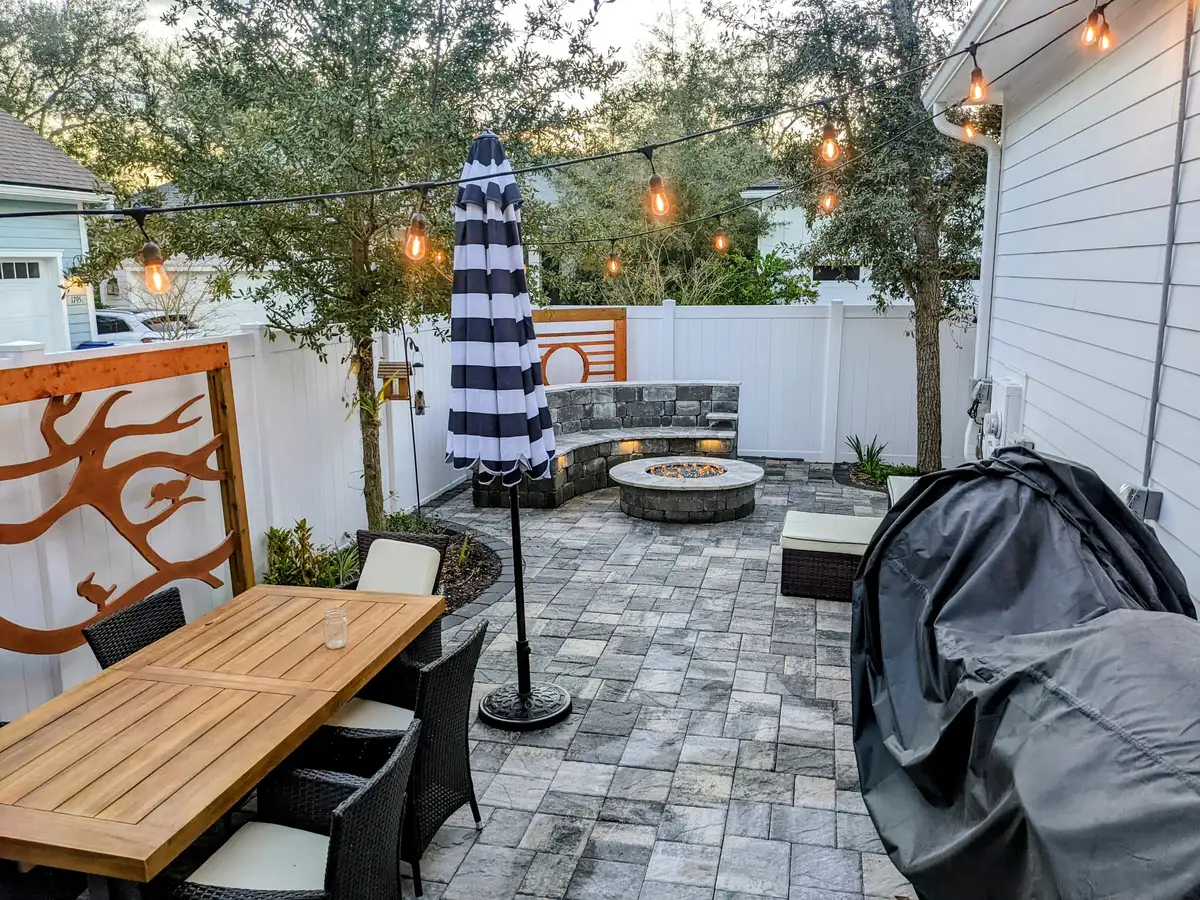
When Florida homeowners begin planning a patio, pool deck, or walkway, one of the first decisions they face is the choice of material. Natural stone and concrete pavers each have loyal advocates, and both can produce beautiful results. But in the specific conditions of Northeast Florida, where heat, humidity, salt air, and sandy soils define every outdoor surface, one material consistently outperforms the other in longevity, beauty, and long-term value.
Natural stone is not always the right answer. But for homeowners on Amelia Island and throughout the Jacksonville area who want a patio or walkway that ages with grace rather than deterioration, it deserves serious consideration.
The Side-by-Side Comparison
Before diving into the details, here is a direct comparison of the two materials across the factors that matter most to Florida homeowners:
| Factor | Natural Stone | Concrete Pavers |
|---|---|---|
| Installed cost | $18-$45 per sq ft | $10-$25 per sq ft |
| Lifespan | 50-100+ years | 25-50 years |
| Heat retention | Stays cooler underfoot | Absorbs and radiates more heat |
| Salt tolerance | Excellent (varies by stone type) | Moderate (efflorescence common) |
| Color fading | Minimal (color is inherent) | Significant over 5-10 years |
| Maintenance | Periodic sealing recommended | Sealing, joint sand replacement, weed prevention |
| Aesthetics | Unique, organic, no two pieces alike | Uniform, manufactured appearance |
| Resale value | Premium signal to buyers | Standard, expected feature |
| Slip resistance | Naturally textured surfaces | Good when new, can smooth over time |
| Eco-friendliness | Quarried, minimal processing | Manufactured, higher carbon footprint |
Natural Stone Types Available in Northeast Florida
One of the advantages of working in the Southeast is access to a wide variety of natural stone materials, many quarried within a few hundred miles. Each type brings its own character, performance profile, and price point.
Travertine
Travertine is the most popular natural stone for Florida patios and pool decks, and for good reason. Its naturally porous surface stays remarkably cool underfoot, even in direct July sunlight. The warm, cream-to-honey tones complement Florida's coastal palette, and travertine's tumbled or honed finishes provide excellent slip resistance when wet.
Travertine handles Florida's humidity well and resists salt damage far better than concrete pavers. The stone develops a gentle patina over time that most homeowners find adds character rather than detracting from appearance. For pool decks especially, travertine is hard to beat.
Flagstone
Flagstone refers to any flat, layered sedimentary stone that naturally cleaves into broad, thin slabs. In our area, the most commonly available varieties include Pennsylvania bluestone, Tennessee sandstone, and Alabama flagstone. Each offers a distinctly different color palette and texture.
Flagstone excels in naturalistic settings where irregular shapes and organic joints create pathways and patios that feel discovered rather than built. It pairs beautifully with native plantings, and its textured surface provides sure footing in wet conditions. Flagstone is ideal for homeowners who want their hardscape to feel like a natural extension of the landscape.
Bluestone
Pennsylvania bluestone is a dense, fine-grained sandstone prized for its blue-gray to blue-green color and exceptional durability. It is one of the hardest natural paving stones available, resistant to scratching, and handles freeze-thaw cycles without issue, though that is less of a concern in our mild Northeast Florida winters.
Bluestone is available in both irregular (flagging) and precision-cut (thermal) formats. Thermal-cut bluestone provides the clean lines of manufactured pavers with the depth and variation of natural stone, making it a favorite for contemporary outdoor living spaces.
Coquina
Coquina holds a special place in Northeast Florida's building heritage. This sedimentary rock, formed from compressed shells and coral, was used to build the Castillo de San Marcos in St. Augustine over 300 years ago. It remains structurally sound to this day.
For residential use, coquina offers a warm, textured surface with a distinctly local character. It is softer than other stone options and requires more maintenance, but for accent walls, garden borders, and low-traffic pathways, it connects a property to the geological and cultural history of Florida's coast.
Florida-Specific Performance Considerations
Florida's climate puts unique demands on outdoor paving materials. Understanding how each option performs under our specific conditions is essential to making a decision you will be happy with for decades.
Heat Retention
This is one of the most significant practical differences between natural stone and concrete pavers in Florida. Concrete pavers, particularly darker colors, absorb solar radiation and can reach surface temperatures of 140-160 degrees Fahrenheit on a summer afternoon. Walking barefoot from a pool to a concrete paver patio can be genuinely painful.
Natural stone, particularly travertine and lighter-colored flagstone, stays measurably cooler. Travertine's natural porosity allows heat to dissipate rather than accumulate on the surface. In a state where you want to use your outdoor spaces barefoot for eight months of the year, this difference matters.
Moisture and Drainage
Northeast Florida receives an average of 52 inches of rain per year, much of it in intense summer afternoon storms. Both natural stone and concrete pavers are typically installed on compacted aggregate bases that allow water to drain through the joints. However, natural stone's irregular jointing tends to provide better permeability, reducing the risk of standing water.
Our sandy soils are excellent for drainage, which benefits both materials. But in areas with poor grading or near the water table, natural stone's slightly better permeability gives it an edge in preventing surface ponding.
Salt Exposure
For properties near the ocean, including much of Amelia Island and the Jacksonville beaches, airborne salt is a constant presence. Concrete pavers are susceptible to efflorescence, a white, chalky deposit caused by salt and mineral migration through the concrete. While not structurally harmful, efflorescence is unsightly and requires periodic cleaning.
Natural stone, having formed over millions of years of geological pressure, is inherently more resistant to salt damage. Travertine and bluestone, in particular, handle coastal salt exposure with minimal visible effects.
Settling and Shifting
Florida's sandy soils can settle and shift, particularly in areas with fluctuating water tables or near tidal zones. Both natural stone and concrete pavers can be affected, but the repair process differs. Individual concrete pavers can be lifted and re-leveled relatively easily. Natural stone flagging, with its irregular shapes, can be more labor-intensive to re-set, though a skilled installer can do so without visible seams.
Proper base preparation is the most important factor in preventing settling, regardless of material choice. In Northeast Florida's sandy conditions, this means a minimum 6-inch compacted aggregate base and careful attention to drainage grading.
Why Bloom and Stone Recommends Natural Stone
Our name is a declaration of what we believe in. Stone is not just a material to us. It is a medium. Every piece has its own color, texture, and grain, shaped by forces far older and more patient than any manufacturing process.
We recommend natural stone for most of our projects because it aligns with the philosophy that guides all of our work: outdoor spaces should feel as though they belong to the land they sit upon. A travertine patio beside a native garden does not look installed. It looks found. A bluestone pathway winding through muhly grass and coontie does not divide the landscape. It connects it.
Natural stone also has a practical honesty that we appreciate. It does not pretend to be something it is not. It does not fade to reveal a different color underneath. It does not crack along manufactured seam lines. It weathers, and in weathering, it becomes more interesting.
This does not mean we never use concrete pavers. For certain applications, particularly driveways and large-format commercial installations, quality concrete pavers offer advantages in cost and uniformity. But for the patios, pool decks, walkways, and outdoor living spaces where our clients spend their time barefoot and at ease, natural stone is what we reach for first.
Making Your Decision
The choice between natural stone and concrete pavers ultimately comes down to priorities. If initial cost is the primary constraint, concrete pavers offer a solid, attractive option at a lower price point. If long-term value, comfort underfoot, coastal resilience, and aesthetic character are the priorities, natural stone is worth the investment.
For most Florida homeowners planning a project they want to enjoy for decades, the premium for natural stone pays for itself in longevity alone. A well-installed travertine patio will be as beautiful in thirty years as it is on installation day. Most concrete paver installations will show their age well before then.
If you are planning a patio, walkway, pool deck, or outdoor living space for your Amelia Island or Northeast Florida home, we would welcome the chance to walk your property, discuss your vision, and help you choose the material that best serves both.