
Naturalistic Landscape Design in Fernandina Beach
Naturalistic design gives a yard softness, movement, and structure without forcing a rigid style onto the property.
Gardens That Feel Grown Into the Property
Naturalistic landscape design shapes an outdoor space around the land already present, using layered planting, organic movement, ecological fit, and restrained hardscape choices for homeowners who want a softer, more site-responsive garden.
In Northeast Florida, naturalistic design starts with observation. The best plan takes cues from live oaks, palmettos, coastal grasses, sandy soil, shifting shade, stormwater paths, and the way surrounding plant communities already behave. Instead of forcing rigid symmetry, we use repetition, texture, seasonal movement, and quiet transitions to make the landscape feel intentional without looking overworked.
That does not mean the yard becomes wild or unmanaged. A naturalistic garden still needs structure. Paths must be clear. Edges need definition. Patio surfaces must drain. Plant masses need mature spacing. Views from windows and porches should be composed. The difference is that those decisions are handled with a lighter hand, using curves, layered heights, stone, gravel, groundcovers, and resilient plant communities to create a more relaxed and lasting result.
For Fernandina Beach and Amelia Island homes, this approach can soften the boundary between house, dune-influenced landscape, maritime canopy, and outdoor living space. For inland properties in Yulee, Wildlight, and Jacksonville, it can help new construction lots feel less exposed and more rooted. In Ponte Vedra, it can balance refined outdoor living with planting that still responds to coastal sun, salt, and rainfall.
Naturalistic design pairs especially well with custom stonework, water features, and low-voltage lighting because those elements can be placed as if they belong to the garden rather than sitting apart from it. A boulder edge can guide water, a path can bend around existing shade, and lighting can graze grasses or stone without turning the yard into a stage. The result should feel calm, useful, and grounded in the place you already have.
Layered Planting
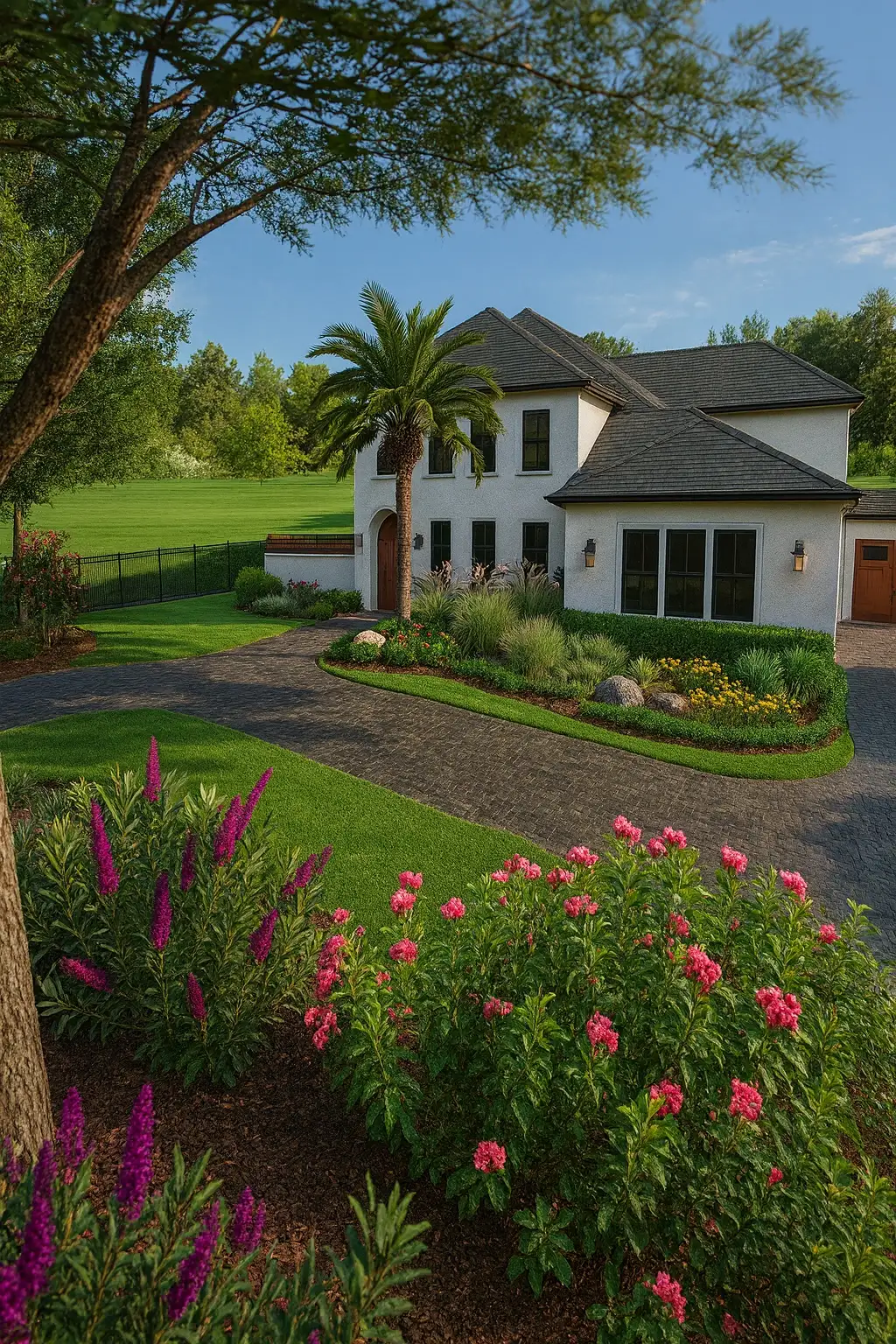
Trees, shrubs, grasses, groundcovers, and seasonal accents are arranged for depth, movement, and mature spacing.
Organic Movement
Paths, bed lines, and stone edges follow comfortable circulation and natural site cues instead of forced geometry.
Ecological Fit
Plant and material choices reflect salt exposure, sandy soils, stormwater behavior, wildlife value, and maintenance goals.
How Naturalistic Layouts Stay Intentional
A naturalistic garden can look effortless, but it should never be random. We organize plantings by height, texture, bloom rhythm, evergreen structure, and the way each mass moves in wind and rain. Repetition creates calm. Openings create places to pause. Taller plantings frame views while lower layers protect the soil and soften hard edges. The design should feel relaxed without losing clarity.
Edges are especially important. A loose planting bed still needs a clean relationship to lawn, gravel, patio, or path. Natural stone can make that edge feel older and more settled. Groundcovers can blur transitions where a crisp line would feel too formal. A curve can guide movement, but it needs a reason: a tree, a view, a seating area, a drainage route, or a change in grade. Without that reason, curves become decoration rather than design.
Maintenance is planned into the composition. We consider which plants will seed, spread, lean, or need seasonal cutback. We leave access for care and avoid planting combinations that compete too aggressively. The intent is a garden that grows richer over time, not a one-season display that becomes tangled. For homeowners who want an outdoor space with softness and structure, that balance is the heart of naturalistic landscape design.
Seasonal change is part of the experience. Grasses can catch low winter light, evergreen shrubs can hold structure when perennials rest, and spring or summer accents can appear without carrying the whole design. That layered rhythm gives the garden depth through the year while avoiding the brittle look of a landscape built around one short bloom window.
We also consider the quiet spaces between features. A naturalistic plan may need a simple gravel pause, a planted threshold, or a narrow transition beside the house as much as it needs a larger patio or focal point. Those in-between moments help the property feel continuous, especially when the home connects several outdoor rooms.
Layered Planting for Coastal Northeast Florida
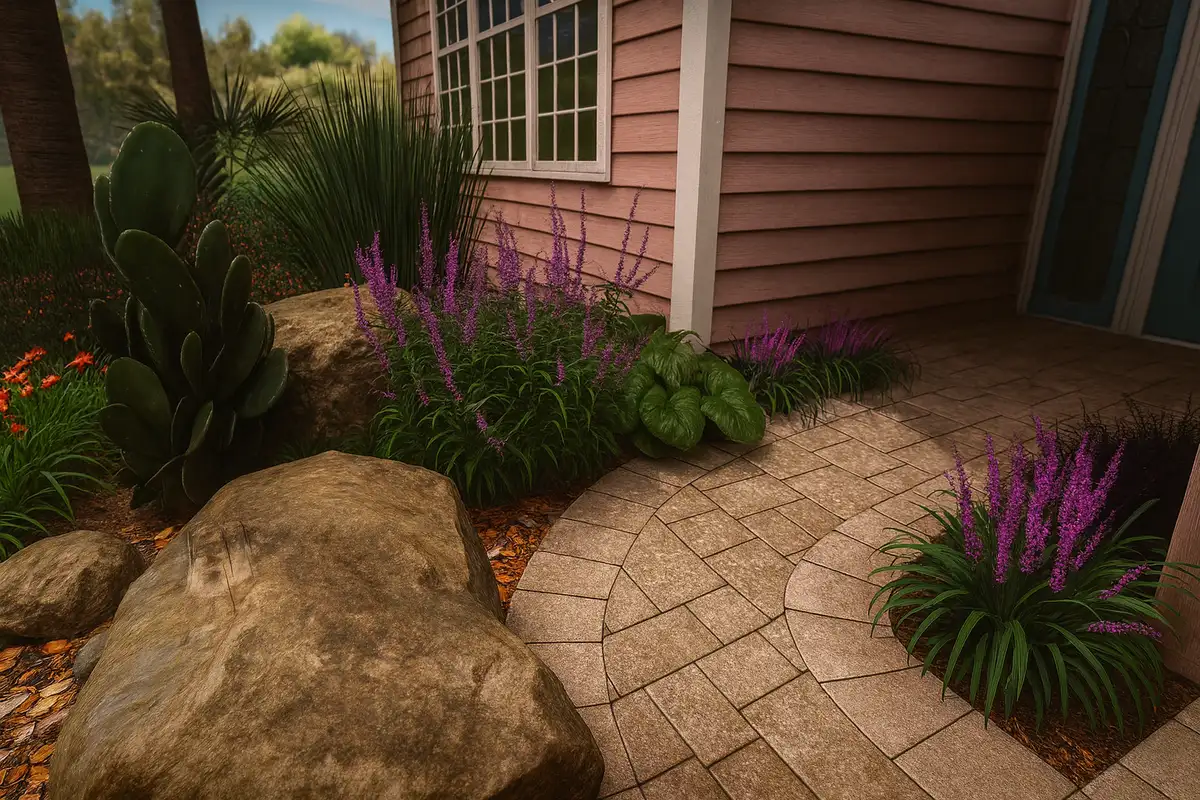
Naturalistic landscape design uses layered planting, organic circulation, restrained stonework, and ecological fit to make an outdoor space feel settled rather than staged.
We begin by reading what is already working on the property: existing canopy, sandy soil, stormwater routes, wind exposure, and the plant communities that thrive nearby. The design then adds structure through bed shapes, paths, edges, and focal points without making the garden feel overly controlled.
For coastal homes, the palette needs to tolerate salt, heat, quick drainage, and heavy summer rain. For inland lots, it may need to soften new construction, create privacy, or connect a larger backyard to wooded edges and outdoor rooms.
Naturalistic work pairs well with custom stonework, water features, gravel paths, low-voltage lighting, and plant masses that provide seasonal change without constant replacement.
How We Balance Wild Character With Clear Structure
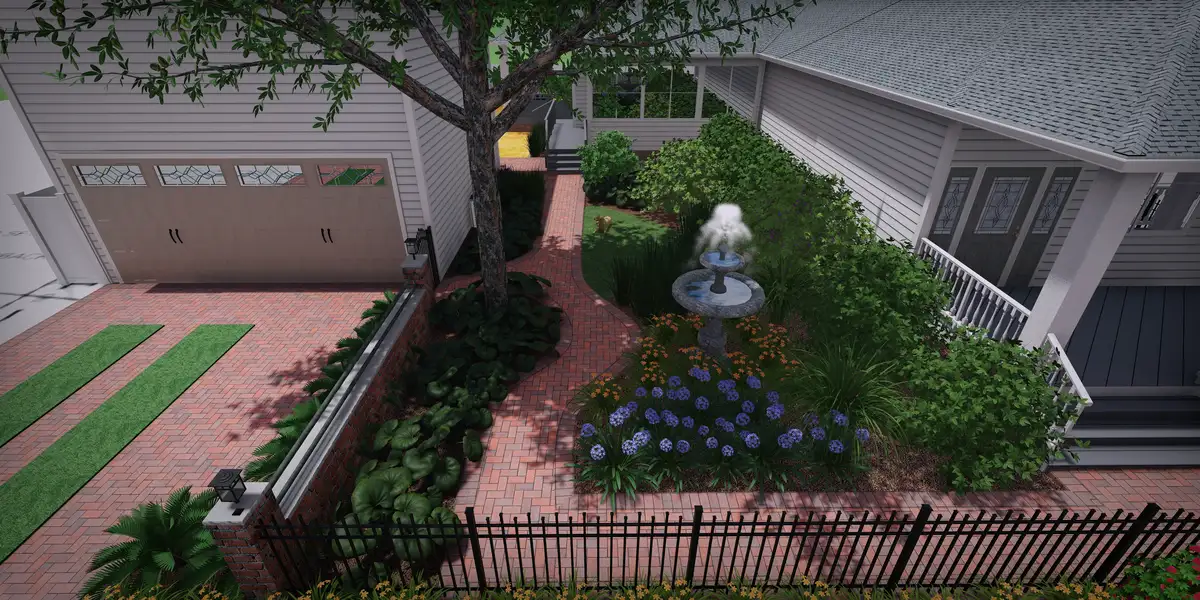
Texture, movement, seasonal rhythm, stone, and maintenance access are planned together so the garden feels relaxed without becoming unmanaged.
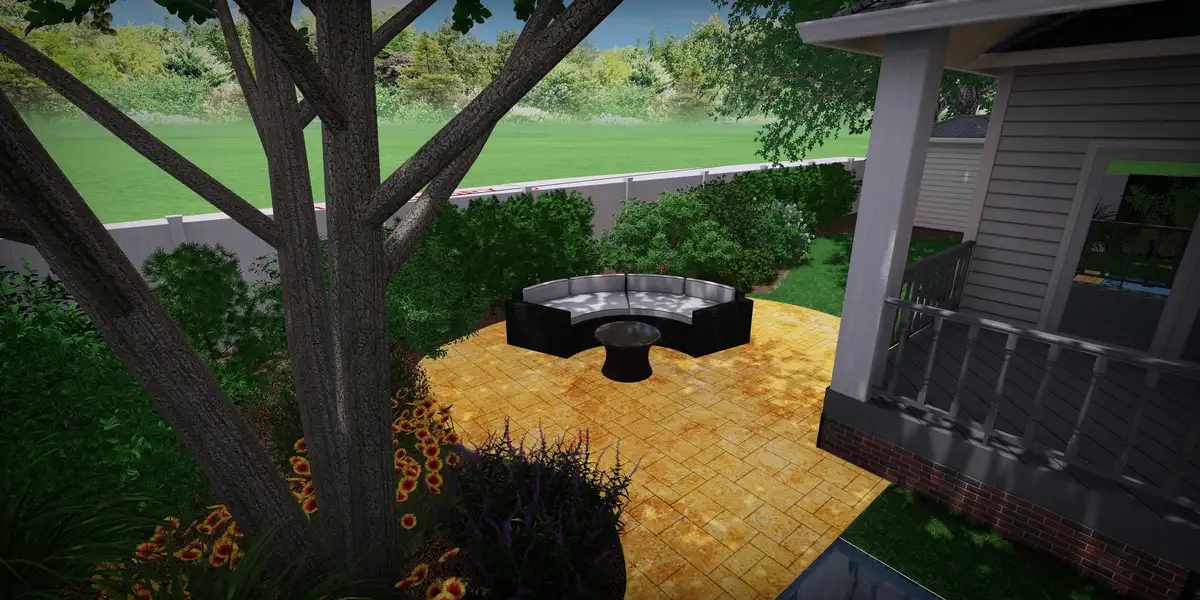
Seeing Plant Layers Before They Mature
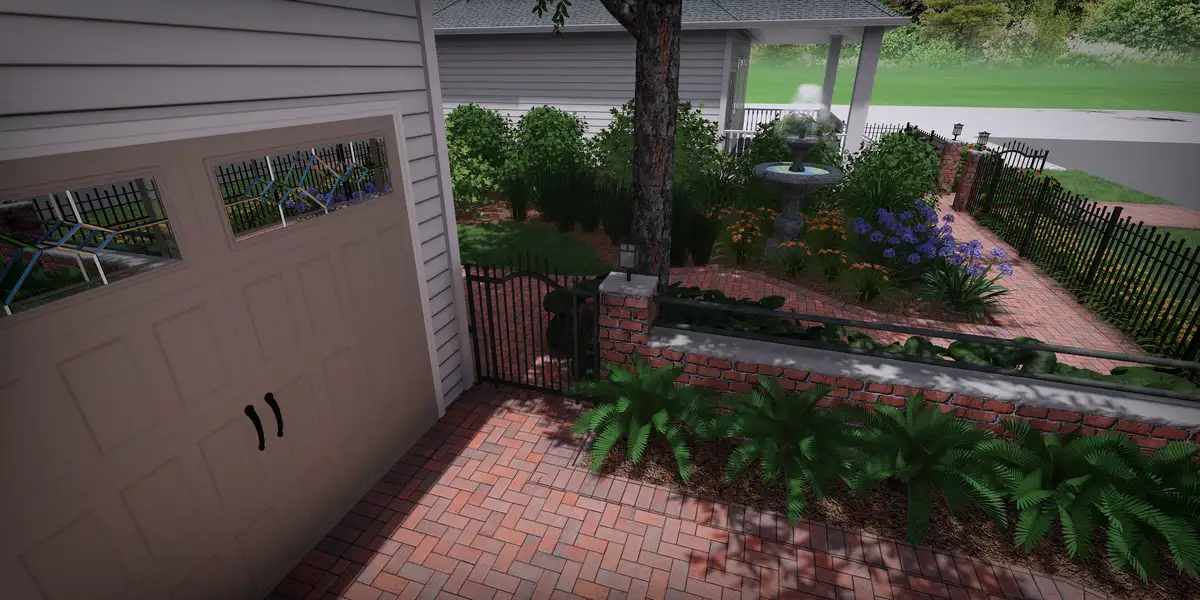
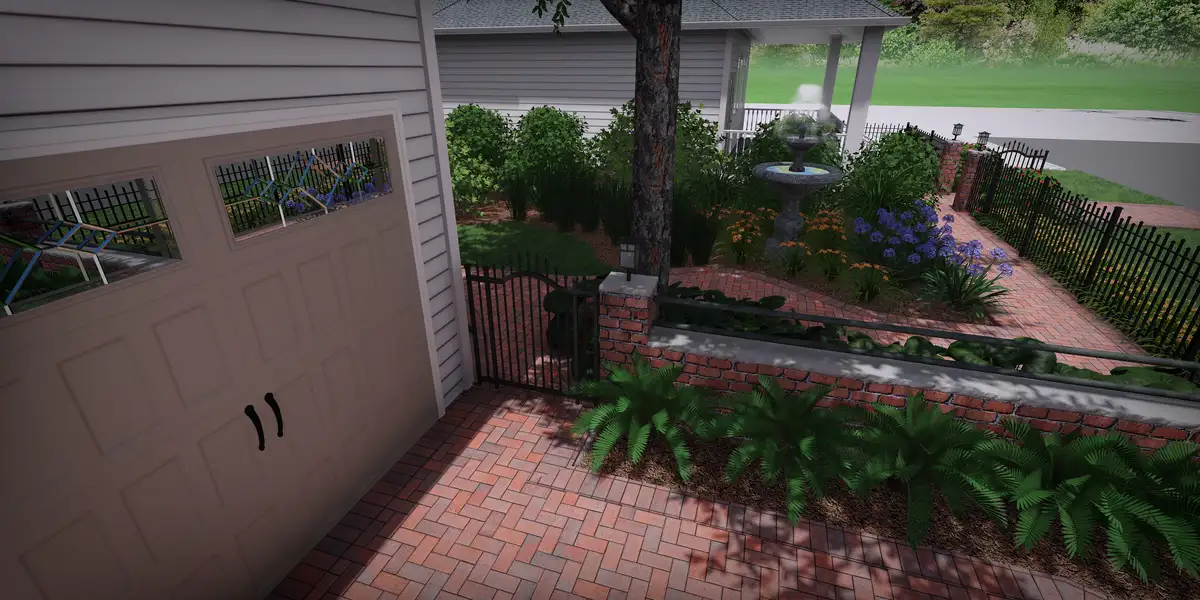
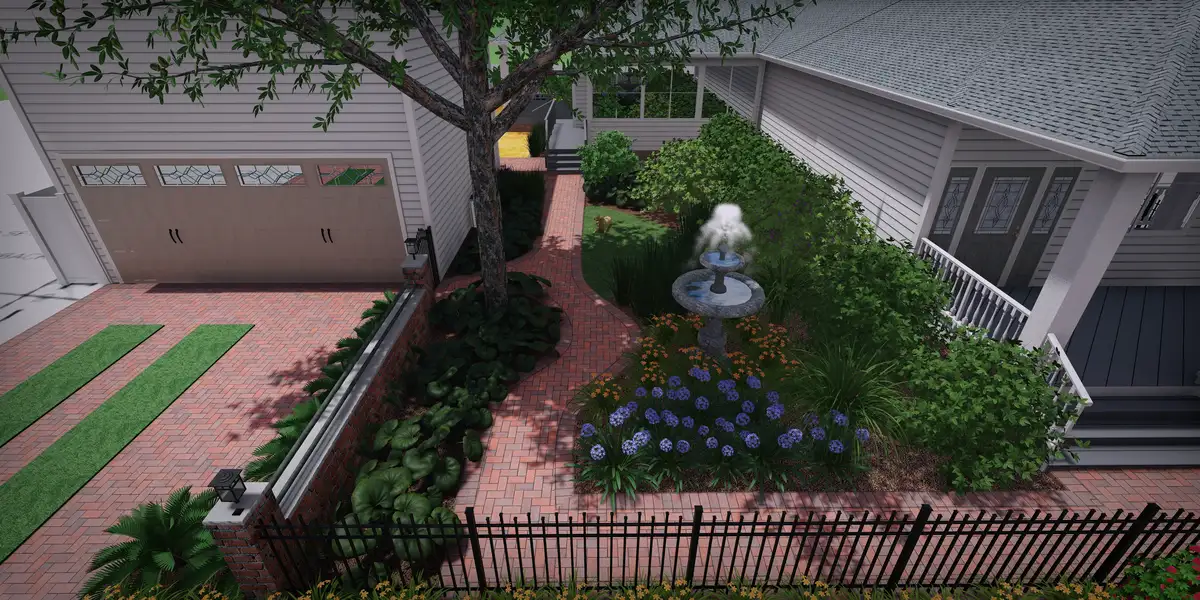
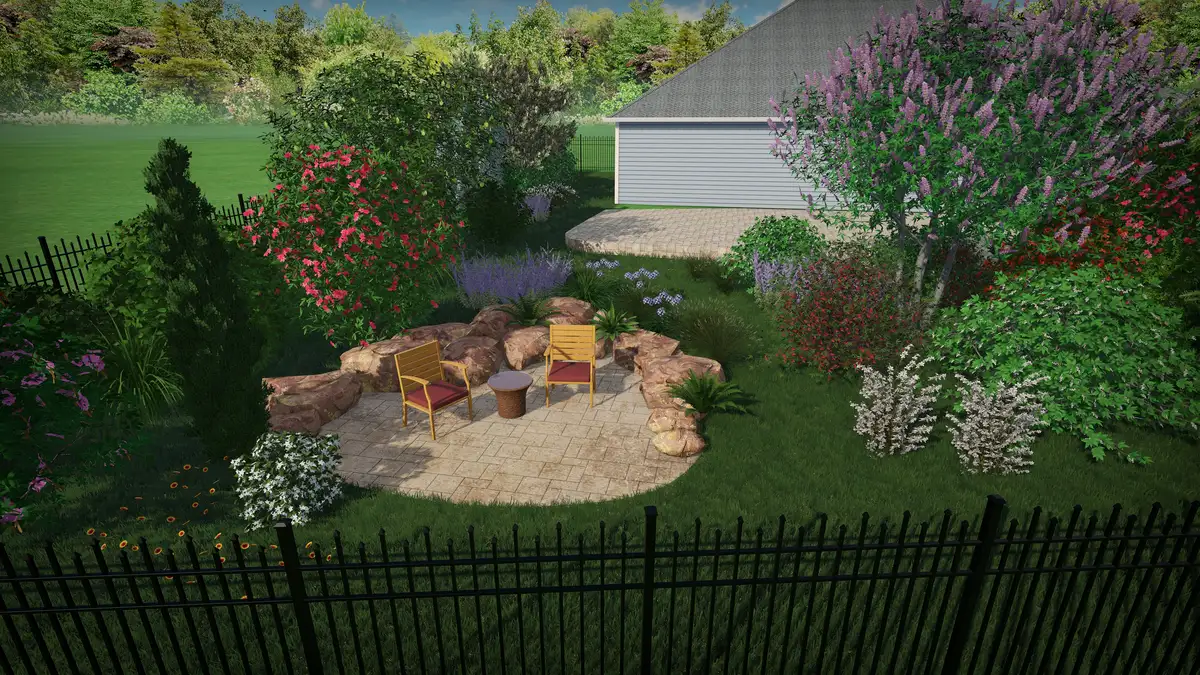
3D review is useful when plant layers, stone edges, paths, and seating areas need to be understood from eye level. It shows how tall grasses, shrubs, trees, and groundcovers will frame views as the garden matures.
The model also helps tune the balance between loose planting and clear structure so the finished garden feels relaxed, not unfinished.
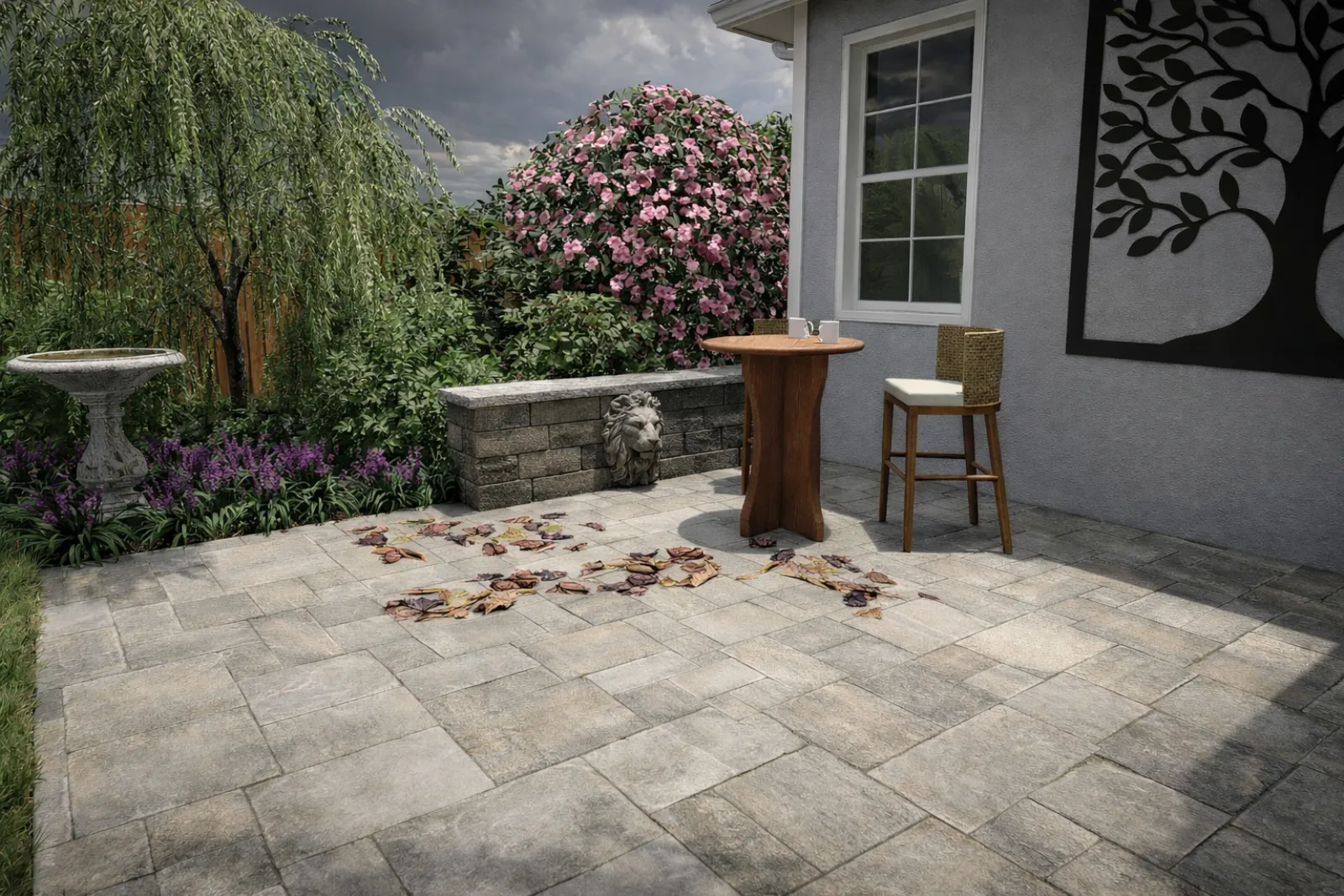
Native and Adapted Plant Communities
Naturalistic planting is composed in communities, not isolated specimens. Grasses, evergreen structure, flowering shrubs, groundcovers, and canopy trees are selected for how they support each other through heat, rain, wind, and seasonal change.
Native and well-adapted plants can support pollinators and reduce water demand, but they still need thoughtful spacing and maintenance access. We plan those practical details into the composition.
Reading Shade, Soil, and Water
We study shade movement, soil texture, drainage, existing roots, wind exposure, and the way the home frames outdoor views. These details shape where the garden should open, thicken, or stay quiet.
A naturalistic plan should feel responsive to the exact site, whether that site is an Amelia Island courtyard, a shaded Yulee lot, or a more formal Ponte Vedra outdoor living space.
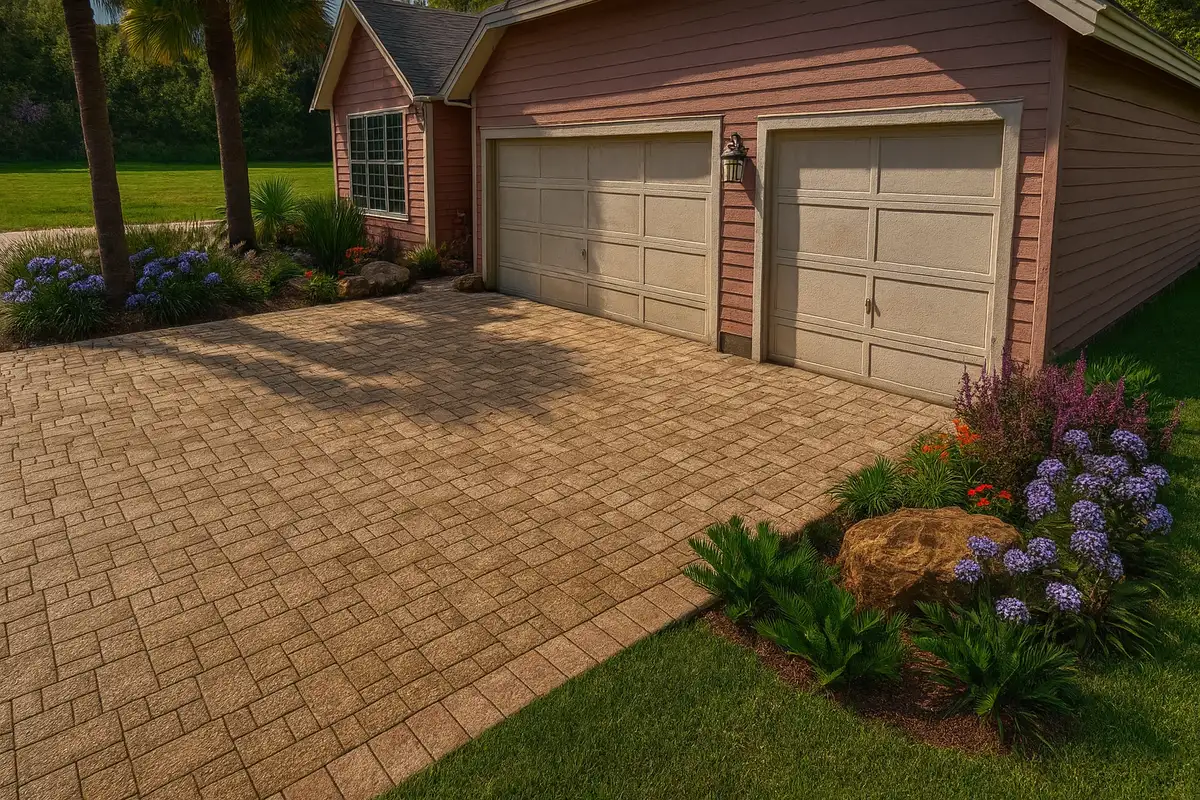
From Site Reading to Living Garden
A naturalistic landscape is planned in stages so the installation has structure on day one and room to mature over time.
Read the Land
We identify the existing features worth preserving and the areas where a softer, more layered garden could improve privacy, movement, or comfort.
Compose the Layers
The design arranges plant communities, paths, stone edges, water or lighting accents, and maintenance routes into a garden that can mature gracefully.
Plant and Settle
Installation focuses on soil preparation, correct mature spacing, clean transitions, and careful placement so the garden has structure while it fills in.
What Makes Our Naturalistic Designs Last
Naturalistic design lasts when softness and structure are planned together.
- 3D photorealistic renderings before any work begins
- Layout decisions guided by canopy shade, sandy soil, stormwater movement, wind exposure, and natural site cues
- Native and adapted plant palettes for Northeast Florida ecology
- Integrated hardscape and softscape planning for seamless flow
- Phased installation options to match your budget and timeline
- Year-round seasonal interest designed into every plan
- Layered native and adapted plant communities planned for mature spacing, seasonal movement, and realistic care
- Coordination with landscape lighting, irrigation, and drainage systems
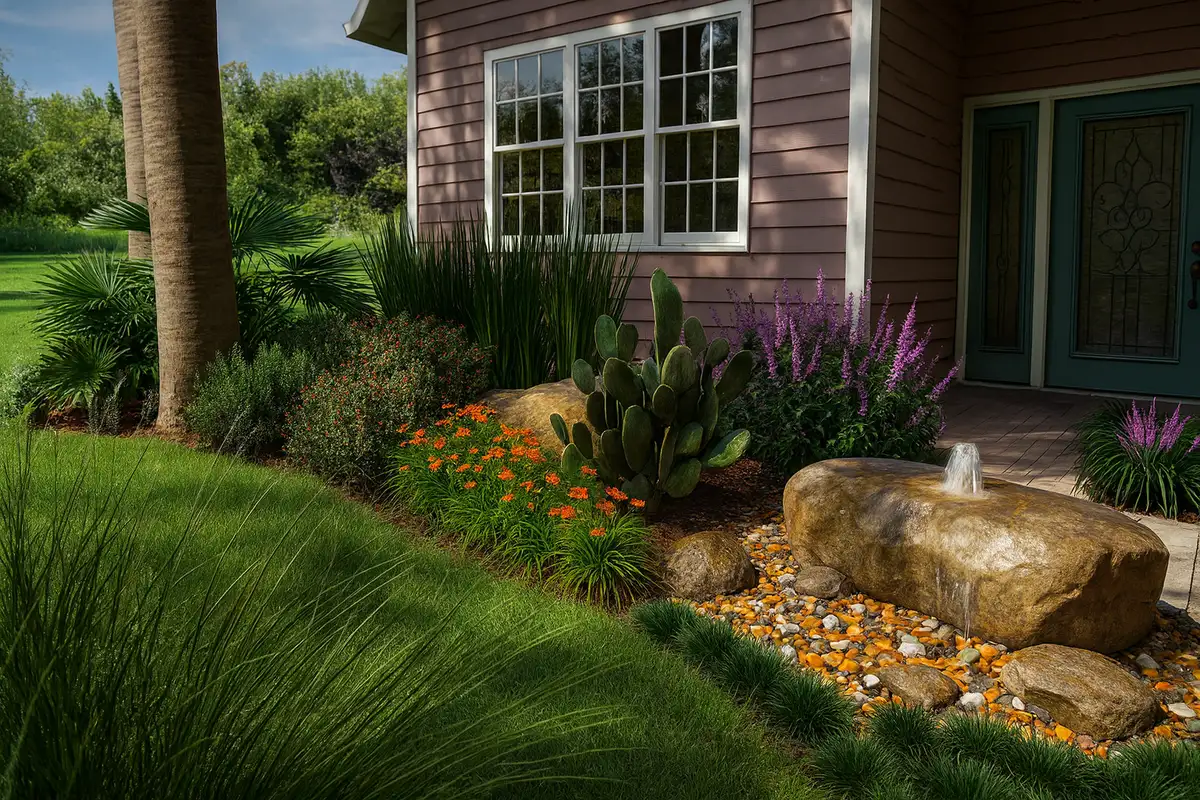
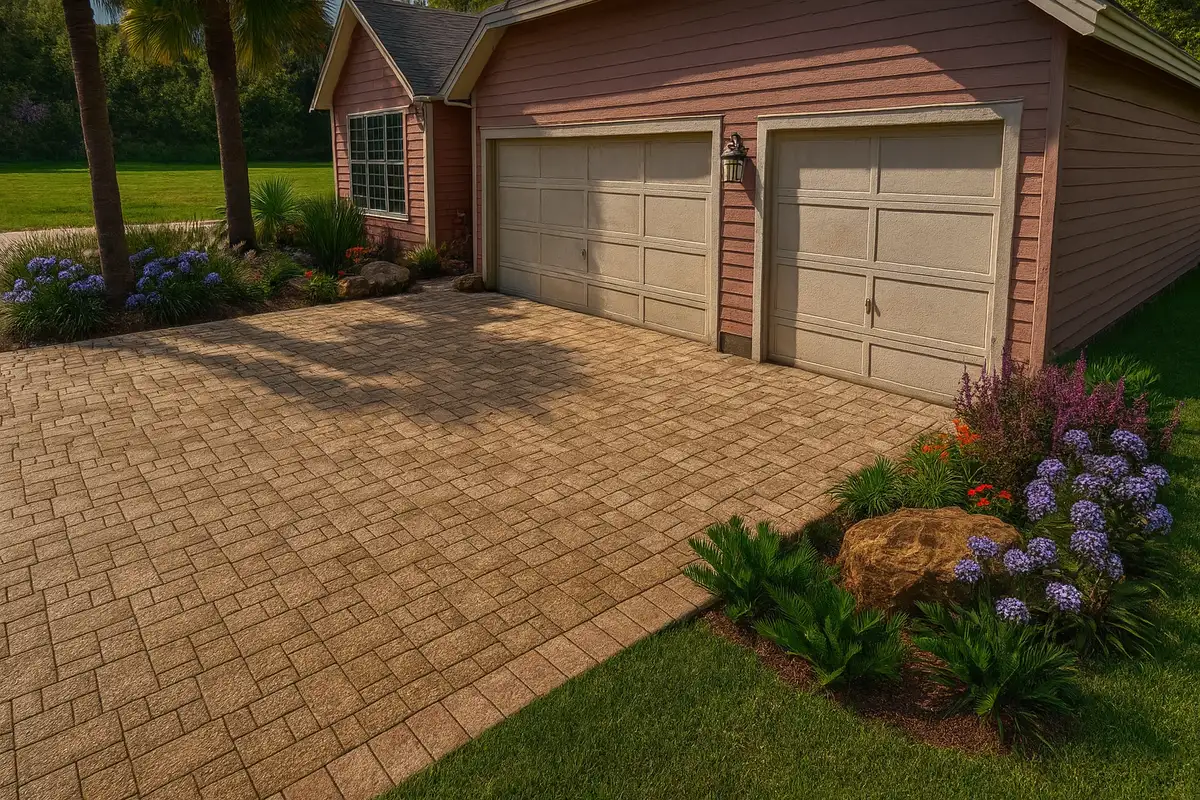
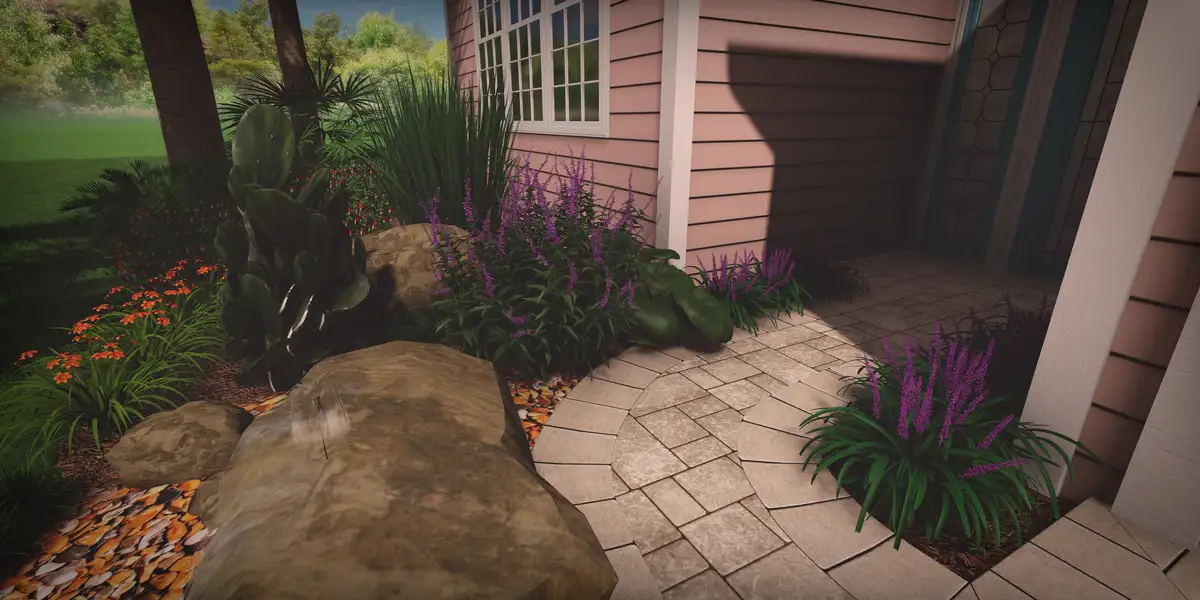
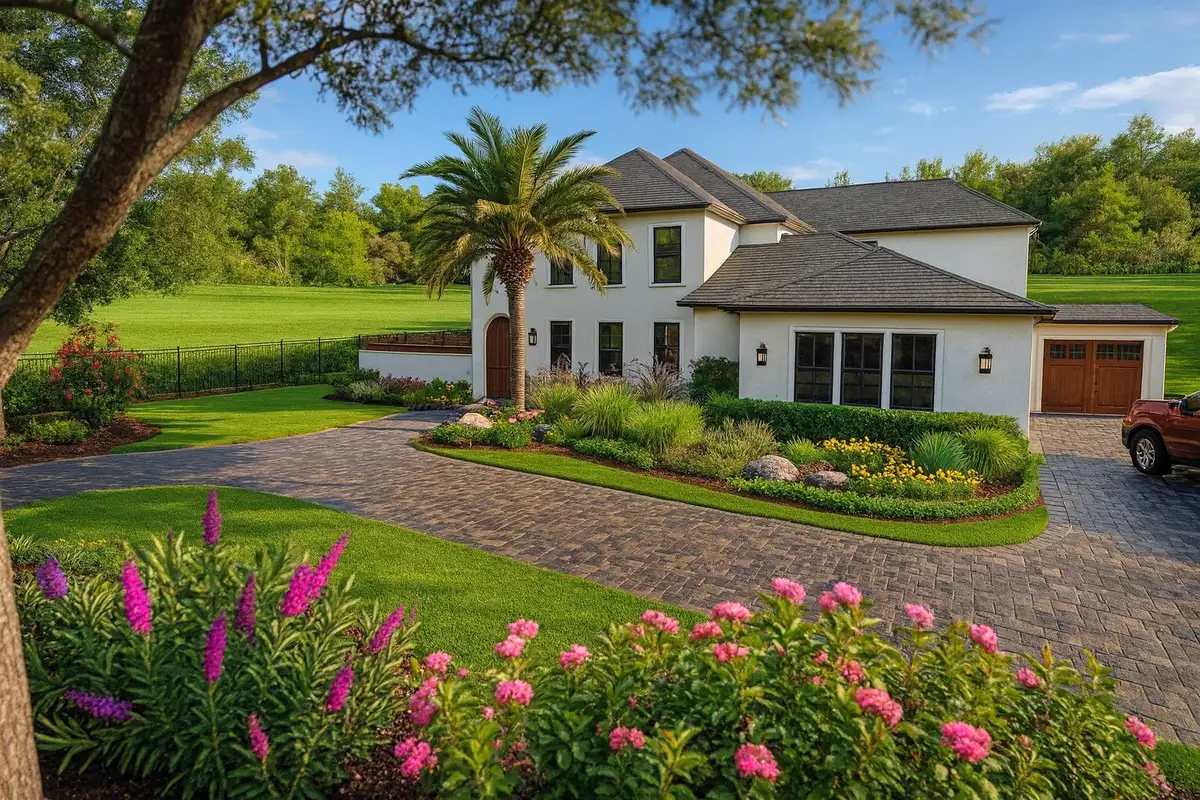
Naturalistic Garden Portfolio
Explore layered plantings, soft stone transitions, and outdoor spaces designed to feel settled into Northeast Florida properties.
Naturalistic Landscape Design FAQ
A naturalistic plan usually takes several weeks because plant communities, mature spacing, seasonal rhythm, stone edges, and maintenance access all need to be balanced. Properties with several garden rooms or major grade changes can take longer to resolve well.
Yes. We design naturalistic landscapes for coastal, wooded, suburban, and new-construction properties throughout Northeast Florida. The plant palette and layout shift by location so a shaded Amelia Island garden does not receive the same treatment as an open Wildlight lot.
Naturalistic design is looser in appearance but still carefully organized. It relies on repeated plant masses, clean circulation, layered heights, and clear edges so the garden feels relaxed without becoming random or unmanaged.
Yes. Stone steps, gravel paths, boulder edges, seat walls, and water features can make a naturalistic garden feel grounded. We choose those elements for texture, scale, drainage, and how naturally they sit among the plantings.
Fees reflect the amount of site study, planting detail, visualization, and phasing required. A small garden refresh has a different design scope than a full property conversion to layered planting, paths, stonework, lighting, and water features.